Showing posts with label los gatos. Show all posts

Sunday, September 13, 2026

A Family Grocer and a New Gym Fill Cornerstone in Los Gatos

South and West San Jose shoppers will soon have two new reasons to pull into Cornerstone Shopping Center. Family-owned Gus’s Community Market signed on for the 18,125-square-foot space Whole Foods left behind at 15980 Los Gatos Blvd., with an opening targeted for April or May 2027. Club Studio Fitness is slated to open this September in the former Rite Aid at 15920 Los Gatos Blvd.

Gus’s will be the first store the Vardakastanis family has opened outside San Francisco, where five markets already serve neighborhoods from the Haight to Mission Bay. The Los Gatos shop will carry produce, full-service meat and seafood, sushi, specialty groceries, beer and wine, plus extras the SF stores do not yet have: house-baked breads, customizable prepared-food bowls, and a café with an indoor-outdoor patio. Landlord Cilker put about $2.5 million into the two spaces and now reports the center at full occupancy, with neighbors that include Hanna’s Noodle Bar, SkinSpirit and Shepherd & Sims.

The grocery map along that stretch keeps shifting. Whole Foods moved into a larger building a short drive away. Nob Hill Foods, a fixture less than a mile from Cornerstone, plans to close in June 2027 after its parent company declined to renew the lease. Lunardi’s remains nearby. Cilker’s team picked Gus’s for a smaller, service-heavy model rather than another big-box format, betting that shoppers from Almaden, Cambrian and Willow Glen will notice the difference in the aisle and at the counter.

Club Studio brings boutique classes, a full gym floor and wellness amenities under one membership. The Orange County-based chain signed a 10-year lease; Gus’s signed 15 years with options. Together the two leases turn a pair of empty boxes into a grocery-and-workout stop that sits a quick hop from southern San Jose neighborhoods.

Source: Silicon Valley Business Journal

Sunday, August 30, 2026

DSW Prepares Second San Jose Store at Almaden Plaza

Footwear retailer DSW will open a second location in San Jose at Almaden Plaza. The new store will occupy roughly 14,400 square feet previously held by a furniture retailer at the 5353 Almaden Expressway shopping center.

Almaden Plaza already anchors a mix of large tenants including T.J. Maxx, Sports Basement, and Hobby Lobby. Recent additions include TleafGreen Burmese Kitchen, with a Benihana restaurant also on the way. The center sits near residential neighborhoods and other retail destinations such as Oakridge Mall and Almaden Ranch Marketplace.

DSW currently operates one San Jose store on Stevens Creek Boulevard, more than six miles from the planned Almaden Plaza site. The chain, owned by Designer Brands, runs more than 500 stores nationwide and has signaled additional openings this year.

Silicon Valley retail vacancy has tightened over the past year, falling from 5.3 percent to 4.9 percent. Limited new construction has helped strengthen leasing demand, particularly in the San Jose-Campbell-Los Gatos area.

Source: Silicon Valley Business Journal

Tuesday, May 19, 2026

Waymo's Driverless Fleet Rolls into San Jose's West Valley with Expanded Service

Residents in San Jose's West Valley will soon gain access to Waymo's autonomous ride service as the company prepares to launch operations across approximately 60 square miles in the coming weeks.

The expansion includes neighborhoods such as Willow Glen and Vista Park along with the cities of Cupertino and Campbell, building on the recent addition of San Jose Mineta International Airport to the network and pushing the total Bay Area coverage past 330 square miles.

Local leaders in Campbell, Los Gatos, and Cupertino have voiced a blend of anticipation and practical questions around safety data, liability, and how the vehicles will interact with existing streets and traffic patterns.

Waymo vehicles have already demonstrated strong safety performance compared to human drivers, and the service promises to offer efficient connections that complement public transit options like light rail stations.

This step forward in autonomous transportation positions San Jose to handle growing demand for reliable mobility, particularly as the city gears up to welcome visitors for major international events.

Source: San Jose Spotlight


Saturday, December 20, 2025

Amazon's Last-Mile Hub: Bringing 600 Jobs to South San Jose

Amazon will be building a new distribution center at the corner of South Seventh Street and East Alma Avenue. The company acquired the 17.8-acre site five years ago for $59.3 million, and now is moving forward to replace six existing industrial buildings with a modern facility. This last-mile e-commerce hub totals 106,800 square feet, including 8,700 square feet of office space and 36,600 square feet for staging and loading, designed to handle efficient package sorting and dispatch.

Operations run 24 hours a day, with deliveries scheduled between 10 a.m. and 9:30 p.m. to serve customers in San Jose and surrounding spots like Campbell, Los Gatos, Scotts Valley, and Santa Cruz. Up to 52 truck trips daily bring items to the site, where workers prepare them for final delivery via vans. This setup strengthens local logistics, making faster shipments a reality for the community.

The project creates 600 jobs, with no more than 400 employees on site at once, adding to San Jose's employment landscape. Demolition starts in July 2026, followed by site preparation and grading through early 2027, with building construction wrapping up by October 2027 and full completion in December 2027. These timelines ensure steady progress toward operational readiness.

Source: SiliconValley.com

Monday, December 1, 2025

Hillbrook School Debuts Permanent High School Campus in Downtown San Jose

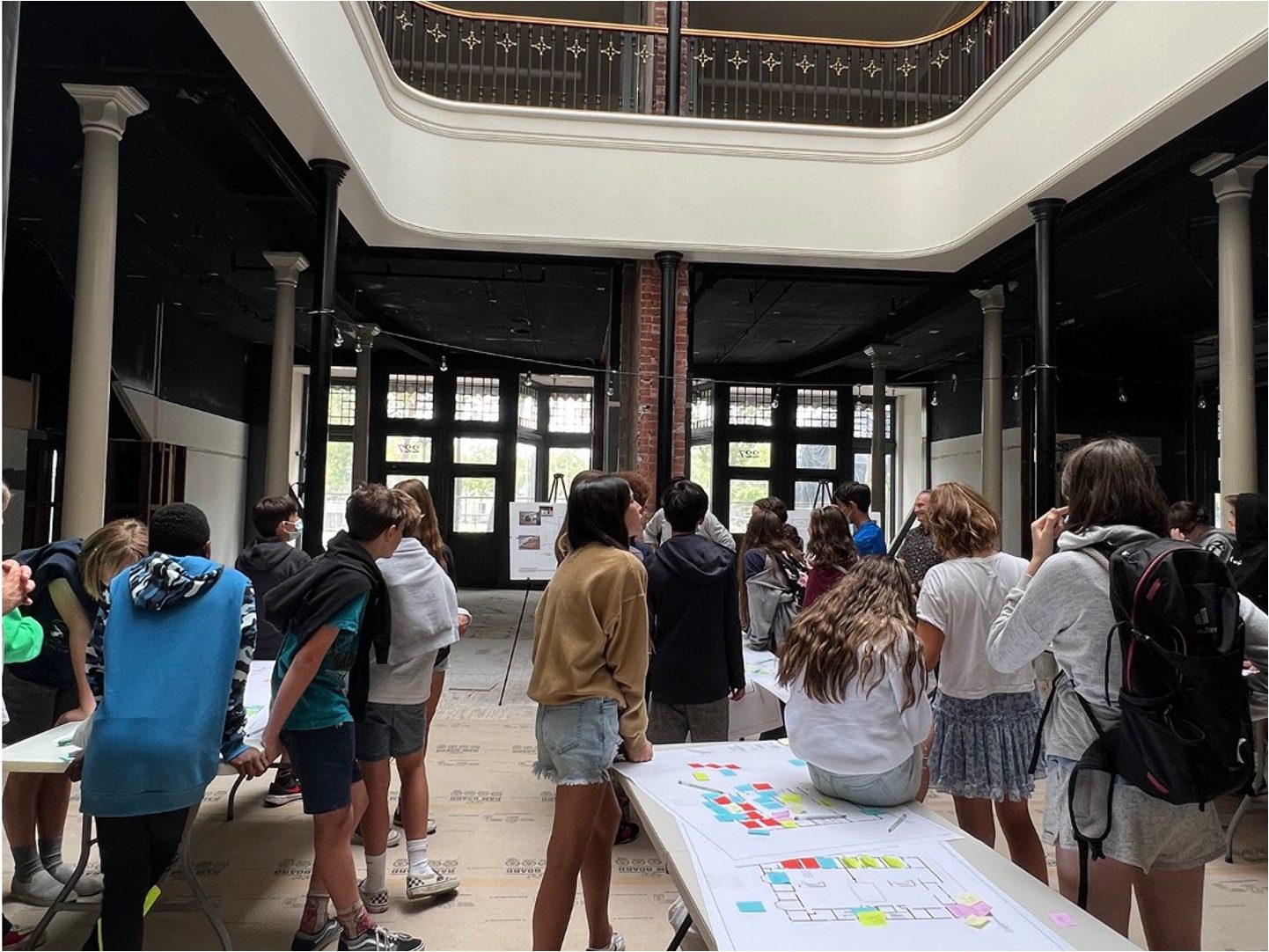
San Jose has gained a new educational landmark as Hillbrook School opens its permanent high school campus in Downtown San Jose. Known for its JK-8 program in Los Gatos, the school now extends its innovative approach to older students in a vibrant urban setting. The new facilities at 227 N. First Street include classrooms, offices, and an arts and athletics center, creating a hub that blends learning with city life.

Students benefit from direct connections to the surrounding neighborhood. They visit City Hall to meet officials, collaborate with cultural organizations like MACLA for performing arts, and enjoy meals from nearby spots such as Hobee’s and Teske’s Germania. Partnerships with transitional housing facilities and easy access via public transit like VTA and Caltrain make the campus a seamless part of San Jose's community fabric.

For young learners transitioning from middle school, this Downtown location offers real-world opportunities. One student highlighted the draw of urban research programs, volunteer work, and partnerships that enrich daily education. The environment encourages hands-on, interdisciplinary experiences that prepare teens for broader horizons.

The campus revives historic structures, including the 1890s-era Moyer Building and a former National Guard Armory. These renovations, totaling around $20 million, preserve character while providing modern spaces filled with natural light and unique layouts. This effort highlights San Jose's commitment to sustainable redevelopment.

With 106 students enrolled and plans to grow to 250-300, Hillbrook focuses on deepening Downtown ties and expanding programs. Financial aid supports about one-third of families, ensuring diverse access to this community-centered education.

Source: SVBJ

Tuesday, September 23, 2025

Hillbrook School Revitalizes Historic Downtown San Jose with New Campus

Hillbrook School, a 90-year-old institution from Los Gatos now in its third year offering high school, recently opened a renovated classroom building in Downtown San Jose at 227 North First Street. The three-story Moir building from 1894 features brick and sandstone construction, a large skylight that floods the interior with natural light, and bay windows that add character. Originally designed as a work-live space with businesses on the ground floor and residences above, it later served as a hotel and most recently housed a law firm. By choosing to restore this historic site near St. James Park instead of constructing something new, the school invests in the city's heritage while creating modern learning environments.

The decision to locate in Downtown San Jose aligns with Hillbrook's vision of using the city as an extended classroom, providing students with real-world experiences amid urban surroundings. Alongside the Moir building, the school transformed the old San Jose Armory on North Second Street into additional facilities, including maker spaces, art studios, and a gym. These renovations preserve the exteriors' classic appeal while updating interiors for contemporary use, promoting sustainability through reuse. The combined 70,000 square feet of space will keep these areas active for years, benefiting both education and the community.

Hillbrook has already integrated into the neighborhood by hosting events like National Night Out for nearby residents and partnering with local spots such as Hobee's restaurant for student meals. This approach fosters connections and vitality in Downtown San Jose. M

Meanwhile, Bellarmine College Prep dedicated its Wade Academic Center, a 43,000-square-foot facility with 21 classrooms, a courtyard, and offices, honoring the school's upcoming 175th anniversary. Named after Rev. Gerald Wade and his family with deep local roots, the center reflects a commitment to history, as the school relocated the 109-year-old Berchmans Hall for repurposing rather than demolition.

New high school in downtown San Jose should have a positive impact

A new high school is coming to downtown San Jose - San José Spotlight

Source: The Mercury News

Wednesday, May 28, 2025

Brunch Blooms in Downtown San Jose

Reza Manion, the mastermind behind the beloved Bloom Eatery brunch spot in Santa Clara, is bringing his vision to 225 W. Santa Clara St., with an anticipated opening later this year. This expansion marks a new chapter for Bloom, a restaurant that’s been winning hearts since its debut in 2020, and it’s a sign of exciting things brewing in the city’s core.

Manion’s journey into the restaurant world started early, shaped by his upbringing in his family’s café, Sara’s Kitchen, a Santa Clara staple for over three decades. That experience fueled his dream of creating his own space, and Bloom Eatery was born. The Santa Clara location quickly gained a following for its standout dishes like croissant French toast and chicken and waffles. Now, Downtown San Jose gets to experience that same magic, with a 4,000-square-foot space that Manion describes as perfect thanks to its natural light and lack of brunch competition nearby.

The move to Downtown wasn’t Manion’s first instinct—he initially leaned toward smaller towns like Campbell or Los Gatos. But when a real estate opportunity arose, he saw the potential for Bloom to shine in an area he believes is on the upswing. Challenges like parking and Downtown’s reputation don’t faze him; instead, he’s eager to contribute to the area’s growth. With the interior build-out underway and permits in progress, he’s aiming to open by late summer or early fall, setting the stage for a cozy brunch haven just before the holiday rush.

What makes Bloom special is its commitment to keeping things simple yet exceptional. The menu stays focused, letting the quality of the food and the care in its presentation take center stage. Whether it’s the flaky layers of croissant French toast or the crispy perfection of chicken and waffles, freshness is key. Manion wants Bloom to feel like a neighborhood gem—approachable, elegant, and rooted in community. 

Source: SVBJ

Wednesday, April 23, 2025

Waymo is Finally Coming to San Jose

Big news for San Jose: Waymo, the innovative robotaxi company spun off from Google, is gearing up to bring its driverless ride-hailing service to town. The company has applied for final approval to operate across nearly all of San Jose, along with nearby areas like Campbell, Cupertino, and Los Gatos. This expansion has the enthusiastic backing of Mayor Matt Mahan and former mayor turned Congressman Sam Liccardo, who both see it as a game-changer for our community.

The San Jose metro is on the cusp of hosting some massive global events in 2026, like the FIFA World Cup and Super Bowl 60. With Waymo’s autonomous vehicles rolling through our streets, we’re poised to offer safe, reliable, and cutting-edge transportation options for residents, workers, and visitors alike. Every time I take a Waymo is seems to get better and better.

Downtown San Jose stands to gain a lot from this move too. The San Jose Downtown Association is all in, pointing out how Waymo can breathe new life into our city’s core. By bridging that tricky last-mile gap between transit stations and key spots like restaurants, offices, and entertainment venues, these driverless cars could help draw more people back to Downtown (especially if they become far cheaper than Uber/Lyft). It’s an exciting step toward making our urban center more accessible and vibrant, especially after the challenges of the past few years.

Safety is another huge plus. With human error behind most vehicle-crash deaths, autonomous technology offers a promising way to make our roads safer. Waymo’s track record and recent support from leaders across the Bay Area show that this isn’t just a futuristic dream; it’s a practical solution taking root right now. Plus, with Waymo already expanding down the Peninsula and eyeing service at San Francisco International Airport, San Jose is joining a region-wide wave of progress.

This is more than just a new way to get around—it’s a chance for San Jose to lead the way in transportation innovation. It won't eliminate public transit but compliment it. My last Waymo was to get from Caltrain to my final destination in SF, and I can see that use case providing even more value to San Joseans going to areas with limited (or no) transit options.


Friday, July 26, 2024

Rising popstar Celeste Doshi brings brat summer to town

It's finally the weekend, so what better time to promote a local San Jose artist. Celeste Doshi is an indie pop singer-songwriter known for her emotionally charged and edgy lyrics. Her debut single, "I Wish I Never Met You," was released on July 1st and showcases her brutally honest songwriting style, capturing the feelings of heartbreak and frustration. 

The song is produced by Emmy Award-winning composer Mike Meiers. Celeste's music has been compared to the style of Olivia Rodrigo and Conan Gray. She has performed at various venues in San Jose and Los Gatos and was selected to participate in the Mastermind Songwriting Retreat in Nashville in 2023. Celeste is working on her debut EP, "twentysomething," set to be released in 2025, which promises to delve deeper into the experiences of a sensitive young woman navigating the complexities of life.


Other Links:


Wednesday, May 15, 2024

Downtown San Jose is getting a new high school

An 87-year-old private school called Hillbrook that is based in Los Gatos is expanding to Downtown San Jose. The school is leasing two historic buildings: the Moir Building at 227 N. First Street and the San Jose Armory at 240 N. Second Street. These buildings will be leased for at least 25 years, which will breathe some new life to the area around St. James Park.

The school was specifically seeking a Downtown San Jose location so that they can partner with local nonprofits, businesses, and SJSU.  Social impact and entrepreneurship are two of the tenants the high school wants to focus on. 

It will take two years to get the buildings ready and total enrollment for the school is expected to reach 300 students. If you have kids in grade school and this is sounding interesting so far... start saving. Today's tuition for Hillbrook goes all the way up to $40,700 per year.

Tuesday, July 18, 2023

THE CATS is back open and featuring live music from Beggar's Opera

The tavern you see on the way to Santa Cruz off Highway 17 is actually a pretty nice restaurant with traditional slow-cooked BBQ and some modern twists like smoked Wagyu with Chimichurri. It's one of the oldest restaurants in the Bay Area and has recently been renovated. It also happens to be a live music and stand up venue. They are kicking off live music again with Beggars Opera this Friday, July 21st from 6:30pm to 9:30pm. No cover charge.

The CATS is located at 17533 Santa Cruz Highway just a few minutes south of Downtown Los Gatos. For more info on the restaurant, bar, or upcoming events, head over here.


Monday, May 13, 2019

Roku snaps up another 162,557 SQFT of San Jose office space

Roku, the popular video streaming tech company, is moving their headquarters from Los Gatos to a much larger space in San Jose's Coleman Highline. Currently they sublease 160,000 SQFT from Netflix, one of their initial investors. The new campus in San Jose will clock in at 735,000 SQFT across five buildings.

Roku has brown from 400 people at the end of 2015 to 1,111 employees just three years later at the end of 2018. That will make the company one of the top employers in the Downtown or Airport areas. Getting the HQ for another fast growing tech company represents a big win for San Jose.

The Coleman Highline is also planning further expansion to a grand total of 1.5 million SQFT along with two new hotels.

Source: SVBJ


Monday, December 3, 2018

Roku is moving their HQ to San Jose

Roku--a popular streaming entertainment company--is taking over the Coleman Highline next to Avaya Stadium. The project will have a total of 8 buildings, all connected by outdoor bridges. Roku has decided to move their headquarters from Los Gatos (where it is subleasing from Netflix) to 570,000 SQFT across four buildings. It will first move into 91,368 SQFT in the first available building this January, followed by three other buildings as they come online.

The lease will be over 11 years, so they are making a major commitment to San Jose. We could see as many as 2,000 new jobs due to their move to San Jose. 

Since the Coleman Highline will eventually have 1.5 million SQFT of office space, that also gives Roku plenty of room to grow assuming other companies don't snap up all of the available floor space.

Source: SVBJSVBJ (2)


Wednesday, October 24, 2018

"State of the Downtown" speech by Scott Knies

Below is a speech by the President of the San Jose Downtown Association, delivered at the October 12th Annual Meeting. It provides a great perspective on where we are today and the key opportunities and risks going forward for Downtown San Jose


“State of the Downtown” speech by Scott Knies
October 12, 2018 
San Jose Downtown Association Annual Meeting

The Momentum Moment: Downtown San Jose’s West Side Story 

In the past 12 months, more than a billion dollars’ worth of downtown property has changed hands. Led by Google, Jay Paul and Gary Dillabough, this massive investment by the private sector is more than half of what the San Jose Redevelopment Agency spent downtown during three decades. It is the surest sign yet of a different direction for San Jose’s center city. 

Yet that new direction depends on who you ask. 

Is this finally San Jose’s moment for its downtown to realize its potential as a vital and beautiful urban community? Is this our time to firmly root San Jose’s unique advantages of diversity, innovation and climate into downtown physical, cultural and social spaces? 

Or, if you adhere to the narrative generated by savvy organizers holding prayer vigils, City Hall marches and protests outside Google’s Mountain View headquarters, the proposed development on downtown’s westside represents every real and existential ill of Silicon Valley: gentrification, high rent, lack of housing, income inequality, bad traffic, not enough union labor. 

While the media may give more attention to protesters, the hearts and minds of most San Joseans support Google’s arrival downtown as we figure how best to embrace the opportunities and rise to the challenges this intense growth will bring. We have to do it right! This new blueprint for urban infrastructure must be planned better, be more interesting inside and out, and be more inclusive than anything San Jose has done before. We have an extraordinary chance to create a city within the city – a model of the future; one that inspires civic pride by putting people ahead of buildings and cars; in providing a positive environment for jobs, homes, recreation, health and joy; and how it prototypes solutions to societal issues like affordability, climate change and the unhoused. 

Is that too large a vision to put on the back of downtown – especially the 250 acres on the westside? We think not. This is San Jose’s moment. 

The vision became exponentially larger 16 months ago when Google’s plans for downtown went public: they were buying up parcels paralleling the Caltrain tracks with the potential to design and build an urban tech district the likes the world has yet to imagine. The antithesis of the Apple Spaceship in Cupertino, Google sees a daisy chain of next generation green buildings integrated into a city street grid enhanced by digital technology and connected by lots of public spaces – sidewalks, plazas, paseos, creek trails, cricket fields, dog parks, playgrounds and bike lanes – and the Dancing Pig sign.

With the Diridon depot train station roughly the midpoint of its acquisitions, Google is assembling land that could accommodate 8-10 million feet and support 20,000 jobs. Buildings could stretch from Auzerais Street on the south to Julian Street on the north, connected by the aforementioned public spaces such as bike paths, a liberated Los Gatos Creek and new streets. Ultimately occupying about 50 acres on the westside, Google has already goosed the promise of downtown higher than any other big plans in the recent past, like the Palladium pipe-dream during the dot-com era, or the Oakland A’s stadium from the prior decade. 

I spoke about Google’s downtown plans last Friday at the Capital Club and when I finished one of the first questions was “where is the westside of downtown?” The westside is a very large area roughly between the Caltrain tracks on the west, Highway 87 on the east, the Union Pacific tracks on the north and Interstate 280 on the south. It includes the Delmas Park neighborhood, Little Italy, Guadalupe River Park and most notably the train station and SAP Center, home of the San Jose Sharks. The city developed a land use plan for 250 acres on the westside years ago that didn’t anticipate the intensity of Google’s urban campus. Even though the current specific plan doesn’t come close to the densities now being considered and has to be redone, along with environmental work, the overall vision for the westside is solid: San Jose needs jobs; put the jobs where the transit modes all come together in an area large enough to incorporate offices, all types of housing, entertainment, open space and link it impeccably with the downtown core.

This last point is crucial to the Downtown Association as well as Google and city leaders. The connections today between the westside and core leave much to be desired. Highway 87 is a formidable barrier and the handful of east/west streets that pass under the freeway all have different problems for bikes, scooters and pedestrians, more so after dark. Think about mobility a decade from now with tens of thousands more residents and employees downtown. Google alone is expecting to generate 8,000 bike riders a day. Downtown streets will have to change. What role will embedded pavement technology play? Is Park Avenue our best east-west link? Or should we develop an entirely new connection reserved for bikes and pedestrians-only – say, an extension of Post Street?

The private sector is not the only one investing billions in downtown’s future and contributing to the current momentum. The BART subway extension and Caltrain electrification are essential public infrastructure projects finally breaking ground while high speed rail and Diridon depot planning are underway.

First, a big shout out to the Valley Transportation Agency Board of Directors and VTA General Manager Nuria Fernandez for their leadership in helping secure the single bore option for construction of BART. You may recall, this was headed to a heavyweight fight between VTA and BART – BART wanted twin bore construction that would dig up five blocks of Santa Clara Street for years. Then on deadline, in April, BART agreed to the single bore! San Jose usually punches way below its weight in Bay Area power tussles. I cannot recall a bigger regional win for our community. 

The impact of the single bore decision was immediate. Instead of facing paralysis on Santa Clara Street for seven years while blocks were torn up, several key properties transacted – including three corners of First and Santa Clara Streets. Investors saw buildings, tenants and businesses could now survive the BART construction while planning ahead for when the trains arrive downtown, which VTA says could be as soon as 2027.

There will be two downtown BART stations: one beneath Santa Clara Street between Market and Third Streets; and the other on the westside connected to the current Diridon depot. That is the mega-station where all the transportation modes intersect. I hope as we design the station as befitting its future stature we will rename it San Jose Central Station – still keeping the Diridon name attached to the historic, brick depot. 

One of the most significant, and under the radar, achievements of the past year was the four-party agreement on the planning for San Jose Central Station. High Speed Rail, VTA/BART and Caltrain were in separate silos designing their own rail systems – and this disconnect was most apparent where all their systems converged downtown. Now working together, with the City of San Jose, the four entities signed an agreement, each one contributing funds, towards joint planning of San Jose Central Station. 

I believe this transit planning agreement is most important for how High Speed Rail might ultimately work in our city. BART was always underground in a subway and Caltrain was always at-grade on their existing rails, but High Speed Rail preferred an alignment in an aerial viaduct with tracks 75 feet above the ground! It would be another Highway 87 barrier on the westside and the Downtown Association has consistently opposed the aerial monstrosity. Now there is another alignment on the table, as part of a City-generated option and representative of the new four-party collaborative spirit between the transit agencies. It is still early in the process to see how this slightly elevated above ground alignment works for the San Jose Central Station, high speed rail operations and the overall community, but anything other than the aerial overpass will be an improvement. 

I would be remiss not to mention how parking fits into the transportation equation. The Downtown Association supports the Sharks lawsuit against VTA for not planning a single parking space for the two downtown BART stations. We understand this is a transitional time. We are in-between a future where autonomous vehicles and flying cars will forever change cities, and the present day – where automobiles are still the San Jose way. Rather than completely stop building parking spaces, let’s balance the realities of today with the dreams of tomorrow. We already see this happening with automated parking stacks, garage floors designed so they can be converted later to other uses and hotel proposals with only offsite parking. We must not put downtown at a competitive disadvantage because we subjugated the automobile too far ahead of market. 

Another significant planning action in the works is the downtown airspace study addressing the current city practice of requiring building heights below what the Federal Aviation Administration allows. The study’s technical analysis was presented to a City Council committee last month with several options, including going up to the FAA heights. Since there are already many tall buildings in the downtown core, this could result in up to 35 additional feet depending on where the site is located. On the westside, however, the tallest building is the arena at 110 feet. The FAA allows 225 feet at the arena, so the potential doubling of height on the westside is THE most substantial opportunity as the City Council considers the big picture for downtown, the airport and San Jose itself.

Even though we’ve been debating height limits since 2007, I realize this will be painted by some as a Google move when in fact it benefits the entire downtown and goals for density, jobs and housing near transit. If the heights are not raised, Google and other developments on the westside will have shorter, wider buildings that take up larger footprints of land thereby leaving less room for parks, plazas and the people-centric spaces that make urban centers more memorable and livable.

The potential of doubling building heights on the westside is a once-in-a-generation decision and the decision-makers should treat it as such. We already have heard from Google they are willing to fund reasonable community benefits for their project but how will the rest of downtown be treated? How will the city regulate this potential height gain and the increased values it represents for both land owners and the community? Will it be treated as another fee – like housing projects pay now for parks; or an as infrastructure assessment district to help fund, say, new streets linking the westside and core? And what does the community receive for the additional height? One percent for art funds? Public space projects, lighting and landscape? Architectural enhancements such as something other than flat rooftops? We look forward to the discussions ahead as the growth of downtown and complete terra forming of the westside has opened up a new suite of policy topics and future planning.

The immediate consideration in front of us is the public sale of the former redevelopment lands to Google. The city formed a Station Area Advisory Committee, with the unfortunate acronym of SAAG, to vet community interests, wishes and demands. As the SAAG process winds down, the decision on the sale heads to the City Council in December. These 23 acres of city-owned and former ballpark lands are a critical milestone in our own downtown San Jose West Side Story. As I mentioned earlier, there are different views on the deal. Some are convinced Google will take more than it gives to San Jose. Others see a strong, global-minded partner reinforcing a civic vision for density, jobs, less traffic and smart growth. In looking at the westside’s 250 acres, there’s plenty of room for affordable housing, and the opportunity to develop new types of living spaces in a mixed-use, walkable downtown that welcomes it. Don’t underestimate your voice in this matter. Please consider attending the City Council meetings and speak. I am often asked what can be done to help. Here is your chance to help.

We’ll update you with the when and where of the hearings. Please connect with our social media platforms, talk to me, any Downtown Association staff or one of the 15 volunteers who are going to follow me up to the podium this morning. Each will give you a little summary of what they have been up to the past year in their community involvement with downtown and this organization. We’ve got three other boards, a bunch of committees, there’s numerous city commissions and task forces – so many ways to get plugged in with your neighbors, peers, public servants, and fellow downtowners. Join in the journey as we create, together, a magnificent public life in downtown San Jose.

Thanks for your attention and enjoy the rest of the meeting. 

Tuesday, May 29, 2018

Google's Diridon plan is starting to come together

If Google ends up building their 8 million SQFT campus in Downtown San Jose, it will be one of the most transformative events even in San Jose history. They have already spent over $250 million assembling various parcels of land in anticipation for the urban campus. Eventually 15,000-20,000 Google employees could be working in San Jose.

Google has started laying out a vision for the 240-acre land surrounding Diridon where they would local the majority of their offices. The improvements would be accessible to the public and benefit the whole community. Google wants to develop four corridors that each have their own theme: Los Gatos Linear Park, Paseo San Fernando, Cultural & Innovation Walk, and the Social & Commercial Loop.

The Los Gatos Linear Park would connect the Guadalupe River to the Los Gatos Creek via a green "eco-walk" and Santa Clara Steet outside SAP would be turned into a commercial district with retail and restaurants. Paseo San Fernando would feature retail, art, and event space.

This sounds very interesting and exciting. The more developed the plan becomes, the more likely this project will come to fruition.

Source: SVBJ


Sunday, March 11, 2018

sjDANCEco’s ChoreoProject Spring Edition

Who: sjDANCEco
What: ChoreoProject, Spring Edition
When - Friday, March 23 @ 8:00 pm and Saturday, March 24 @ 10:30am4:30pm & 8:00pm
Where - Location: SJSU Dance Theatre. One Washington Square, San Jose, CA The theater is located in the Spartan Complex building on the San Jose State University Campus near 4th Street and San Carlos Street. (Nearby inexpensive parking at City of San Jose garage on San Carlos Street between 2nd and 3rd Streets.

Tickets - $20 (students), $25 (seniors), $30 (general)
BOX OFFICE: 408.520.9854   www.sjDANCEco.org

Why: Since it’s inception in 2005, sjDANCEco has given opportunity to more than 100 choreographers from the Bay Area (and beyond) the chance to present their dances to audiences in the ChoreoProject programs.  

This year’s Spring edition of the ChoreoProject is geared toward Youth Groups. "For Youth - By Youth." Young dancers (age 13 - 18) from around the Bay and beyond are brought together in an unique program dedicated to the future of dance in an opportunity to share vital and vibrant dance by aspiring youth dancers and choreographers. 

More Information: Groups are still be added, but the following are currently confirmed: Los Gatos Ballet, Independence High School (San Jose), New Ballet School (San Jose), East West Music and Dance (San Jose), Spector Dance Youth Group (Marina), Xiaopei Dance School (Pleasanton), Westlake School for the Performing Arts (Daly City), Urmila Vudali Bharatanatyam (Palo Alto) and Northern California Dance Conservatory (Roseville). Other groups expressing interest are from San Francisco, Berkeley, Monterey, Dublin, and Oakland.

Friday, July 7, 2017

San Jose Beer & Wine Tours

It is amazing how many great wineries and breweries we have within a 30 mile radius of San Jose. One of the best ways to experience these places right in our backyard is with a tour led by a knowledgeable designated driver. I just came across Tommy John's which specializes in both wine and beer tours.

The beer tours caught my eye since most of them are located in San Jose proper. Potential tour stops include Hermitage Brewing Company, Gordon Biersch Brewery, Strike Brewing Co. and Warehouse Tap Room, Santa Clara Valley Brewing, Rabbits Foot Meadery, Golden State Brewery, Taplands, and JP Das Brew Tasting Room. Each tour features four different stops with multiple tastings at each one, behind-the-scenes tours, a picnic boxed lunch, snacks, refreshments on the bus, and discounts for "souvenirs" to take home and drink later. The epic 5.5 hour tour runs Wednesday through Sunday and costs $139 per person. It isn't cheap, but sounds like a worthy excursion for beer lovers.

Their wine tours are similar four-stop excursions that last 5 to 6.5 hours and feature as many as 23 (!) varietals to try. The wineries are mostly centered around Los Gatos and Santa Cruz, providing scenic drives to compliment the tastings. The wine tours range from $149-189 per person and include the tastings, lunch, and snacks.

For more information and to see all of their tours, head over to the Tommy John's website.

Wednesday, March 1, 2017

Hapa Brewery opens at Midtown Arts Mercantile

San Jose just welcomed its newest craft brewery, conveniently located at the Midtown Arts Mercantile (460 Lincoln Ave.). Hapas's Brewing Company is kicking things off with three different beers: a blond ale, and IPA, and a mocha porter. You can sample all three in their 1,000 SQFT taproom and outdoor patio. Eventually the selection will grow to eight beers and Hapa's is planning to bring in food trucks on weekends.

The taproom is open Wednesday-Thursday from 4pm-9pm, Friday from 3pm-9pm, Saturday from 11am-9pm, and Sunday from 11am-6pm. While you are there you can also check out Chromatic Coffee, Good Karma Bikes, and Terra Amico Studios. For more details, have a look at the full press release below or visit the Hapa's Brewing Company website.


Hapa’s Brewery, Inc. joins city’s robust brewing community

SAN JOSE, Calif. – Adding to a burgeoning craft beer scene in San José, Hapa’s Brewing Co. will celebrate the official opening on Saturday, Feb. 25 of its brewery and taproom inside Midtown Arts Mercantile – the former cannery turned artisanal “maker space” in the city’s Midtown neighborhood. The opening ceremony will take place at 1 p.m. at the facility, 460 Lincoln Ave.

The 7,500-square-foot facility is the brainchild of childhood friends Derek Tam and Brian Edwards, who started brewing in Edward’s mother’s Los Gatos home a couple of years ago as a hobby. As they worked to hone their craft, it didn’t take long to home in on a business opportunity.

“There were breweries popping up everywhere, and we realized San José is developing an active brewing ecosystem,” Tam said. “We said it would be so cool to come back to the area where we grew up and turn this hobby into an actual business.”

The pair joined up with experienced Sonoma County brewer Peter Burrell, with Edwards leaving his tech job to work full time alongside Burrell. About 18 months ago, the team signed a lease with San José-based SWENSON for space inside Midtown Arts Mercantile. The 40,000-squarefoot facility was designed from the ground up for manufacturers, artists, and creative retailers. Other occupants include Chromatic Coffee, Good Karma Bikes, and Terra Amico Studio.

San José Economic Development staff assisted the developer of Hapa’s Brewing with project review, seeing a chance to preserve a historic industrial building for modern “maker” uses.

"We know there's lots of demand for industrial uses throughout San José, and Hapa's arrival at Midtown Arts Mercantile shows these older buildings can be a perfect fit when creatively retrofitted," said Kim Walesh, Economic Development Director and Deputy City Manager for the City of San Jose. "We're happy to welcome Hapa's Brewing to the midtown neighborhood."

Hapa’s Brewing kicks off with three brews – including a blond ale, an IPA, and a mocha porter - as it ramps up to a planned eight taps. The facility comprises a 1,000 square foot taproom and an outdoor patio, complete with roll-up doors. While it doesn’t offer its own food, Hapa’s plans to bring in food trucks on weekend afternoons. For now, Hapa’s is focused on the taproom experience, and is researching wholesale agreements with local bars, restaurants, and grocers.

“Hapa’s is exactly the kind of tenant we are seeking for Midtown Arts Mercantile: A unique local business that will provide the neighborhood with a fantastic social gathering space,” said Forrest Cerrato, portfolio manager for real estate developer SWENSON.

Hapa’s joins a small but growing ecosystem of craft beer and other craft drink-related businesses in San José. In the last two years, San José’s venerable Gordon Biersch has been joined by Strike Brewing, Hermitage Brewing, Santa Clara Valley Brewing and Coterie Cellars. Last year, GigaYeast – which makes liquid yeast for commercial and home brewers – opened on Qume Drive.

For more information on Hapas Brewing, visit hapasbrewing.com.

About San José Office of Economic Development
The San José Office of Economic Development is committed to a vital, competitive San José
economy that increases prosperity for people and companies. OED guides the city’s economic
strategy, provides assistance for business success, connect employers with trained workers, and
provides art and cultural resources to our community. For more information, go to
sjeconomy.com.

About City of San José
San José, Capital of Silicon Valley, is the largest city in Northern California and the 10th largest
city in the nation, with an ethnically diverse population of more than one million. San José was
founded in 1777, once served as the state capital of California, and encompasses 180 square
miles. The City’s website is sanjoseca.gov.
#

Thursday, March 31, 2016

2nd Story Bakeshop now serving organic baked goods in Downtown San Jose

A fancy new bakery has just opened up at 138 E. Santa Clara Street, one block away from the San Jose City Hall. 2nd Story Bakeshop specializes in a variety of organic baked goods using locally sourced ingredients. One of the co-owners has "a particular obsession with long-fermented, naturally leavened, hearth baked breads, and enjoys adding whimsical combinations of ingredients to flavor them." I think that sentence alone shows that this isn't your run-of-the-mill bakery.

2nd Story Bakeshop carries specialty loaves that change each week, cookies (dark chocolate and sea salt, honey wheat graham crackers, pear pie cookies, etc.), brandied-apple pecan crumbles, apple walnut cake, and their signature granola.

The bakery is open Tuesday through Friday from 6:30am-1pm. Since the hours are limited, if you can't make it to their Downtown San Jose location you can find their bread in Whole Foods on The Alameda or on Stevens Creek in Cupertino. They also participate in the Santa Clara Farmer's Market (Saturdays), Morgan Hill Farmer's Market (Saturdays), Los Gatos Farmer's Market (Sundays), Mountain View Farmer's Market (Sundays) and the East Santa Clara Street Farmer's Market (Wednesdays in the Summer).

For more information visit the 2nd Story Bakeshop website over here.

Source: Robertee from the San Jose Development Forum


Wednesday, March 16, 2016

Envision Silicon Valley - preliminary VTA project evaluations

The VTA has started doing very early research on a variety of potential future transit projects. It would almost definitely take an increase in sales taxes for any of these to become reality, but it is interesting to see the ideas that are being tossed around.

There were several projects in the study that are already well into planning-mode. These include BART to Downtown San Jose, a Light Rail extension to Eastridge Mall, a Light Rail extension to Los Gatos, and expanding the Express Lane system on our freeways. However, there were also brand new projects that I have never heard even mentioned before. This include a billion dollar Downtown San Jose Subway (nice!) that would significantly speed up the whole Light Rail system, a $1.5 billion Light Rail line that would go from Downtown San Jose to Santana Row/Valley Fair and eventually De Anza College, a new Light Rail line that would go from that NASA/Bayshore station to North Bayshore in Mountain View, and a ton of highway interchange improvements.

You can find some of the project "evaluation cards" below, but I recommend going through the whole list over here.

Source: Robertee from the San Jose Development Forum